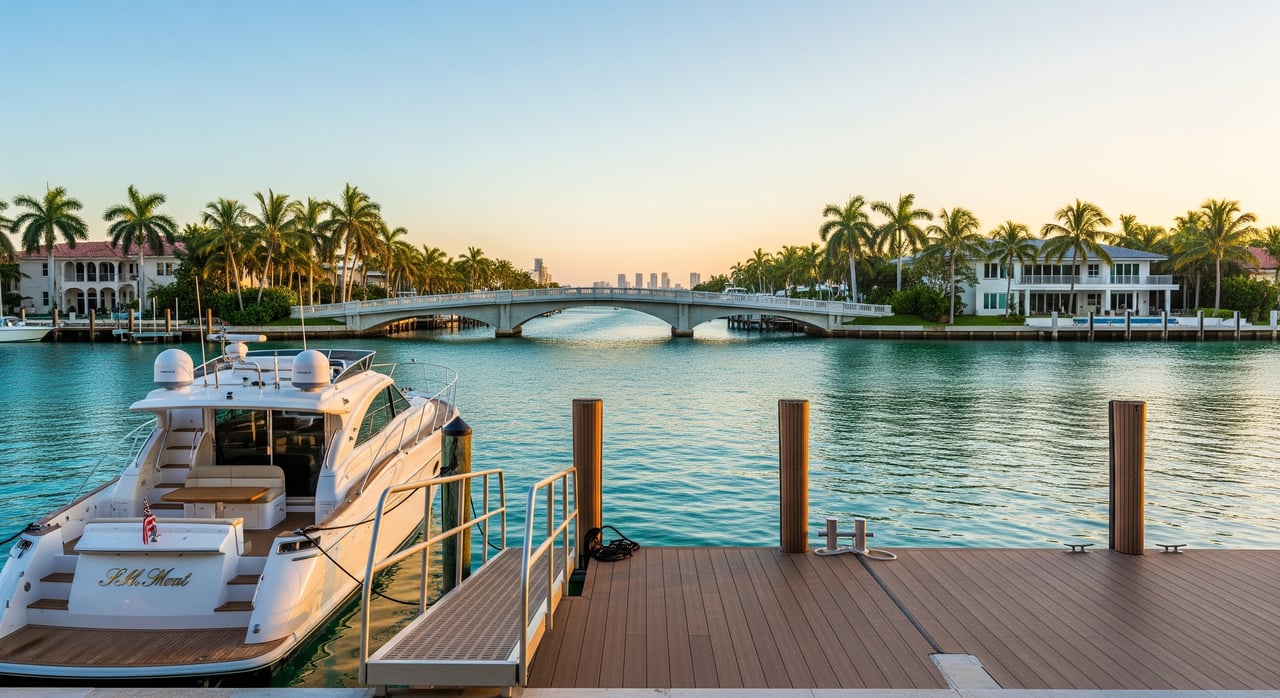
Thinking about buying a waterfront home in Pompano Beach and bringing your boat with you? If you have heard the phrase “no fixed bridges,” you know it sounds like a big win for ocean access, but it can also be confusing. You want clear, practical answers about bridge clearance, canal depth, and the best routes to the Atlantic. In this guide, you will learn how fixed bridges differ from “no fixed bridges,” how Pompano’s canals connect to the ocean, and how to match a property to your exact vessel. Let’s dive in.
Fixed vs. no fixed bridges explained
A fixed bridge has a permanent clearance. If it is low, tall vessels cannot pass underneath. A high-rise fixed bridge may be tall enough for many boats, but you must still confirm the published clearance.
“No fixed bridges” means there are no permanently low fixed bridges between the property and the open ocean. You may still encounter movable bridges that open on a schedule, tides that change practical clearance, or channel spots that are too shallow for some boats.
How Pompano canals reach the ocean
Most Pompano Beach waterfront homes sit on residential canals that feed into the Intracoastal Waterway, known locally as the ICW. From there, boaters head north to the Hillsboro Inlet or south to the Port Everglades Inlet to reach the Atlantic.
You will see three common water settings on the market. Some homes sit on canals that connect directly to the ICW. Others are on cul-de-sac or private canals with tighter turning and shallower depths. A third group is on wide channels or the ICW itself, which often provides easier maneuvering.
What “no fixed bridges” does not guarantee
“No fixed bridges” is about vertical clearance, not depth or dock fit. You still need to confirm that the canal and dock are deep enough for your draft, and that there is space to turn and berth safely.
It also does not promise that bridges always open when you arrive. Movable bridges can have operating schedules, temporary restrictions, or maintenance closures. Dock infrastructure also varies by home, so confirm power, pilings, and permits.
Build your vessel profile first
Before touring, write down the exact specs for your boat:
- Length overall (LOA)
- Beam (width)
- Draft, both light and fully loaded
- Air draft to the highest fixed point
- Turning radius and preferred docking setup
- Shore power needs and dock amenities (water, pumpout)
This one sheet will guide your search, help you filter listings, and speed up verification with sellers and marinas.
Verify the route and the dock
Check vertical clearance
Compare your air draft to every bridge on the route from the property to the ocean. Use the official clearances on the NOAA nautical chart viewer. If a movable bridge is on your route, confirm its schedule in the U.S. Coast Guard Local Notice to Mariners. If your clearance is close, note whether the published number is referenced to mean high water or another datum.
Confirm depth and tides
Look at channel soundings on NOAA charts, then ask for recent depth readings near the dock and along the approach. When in doubt, plan a low-tide trial with a captain to confirm safe passage. Check tide timing and ranges using NOAA tide predictions.
Measure dock size and maneuvering room
Verify dock length, piling spacing, and the fairway width for backing in or turning. Ask for any permits and maintenance records for the seawall and dock. In tighter cul-de-sac canals, turning room can matter as much as depth.
Confirm bridge operations
If your route includes movable bridges, note operating hours and VHF contact procedures. Temporary restrictions and maintenance are posted in the Coast Guard’s Local Notice to Mariners. Plan for occasional delays during peak boating times.
Filter listings the smart way
When you search, use waterfront and dock fields to target the right homes. Helpful fields and keywords include:
- Waterfront type: Canal, Intracoastal
- Ocean access: Direct, No Fixed Bridges
- Dock features: private dock, boat lift, dock length, 30/50/100 amp electrical
- Keywords: No Fixed Bridges, Deep Water, Ocean Access, Intracoastal Front, Boat Dock
If a listing looks promising but details are vague, ask the listing agent for the bridge route, dock measurements, recent depth soundings, and any bridge opening schedules they have on file.
On-the-water validation before you buy
A property visit is your chance to ground-truth the details. Follow these steps:
- Walk the seawall and dock to check condition, electrical service, water, and piling heights.
- Use NOAA charts to trace the route to the inlet and mark bridges with their clearances.
- Call a local marina or harbormaster to ask about shoaling, depths, and typical current conditions.
- If your draft or air draft is close to the limits, bring a licensed captain for a low-tide approach.
- Include a purchase contingency for a marine survey and a depth survey if needed.
Local resources for Pompano Beach buyers
- Official charts and bridge clearances: the NOAA nautical chart viewer
- Bridge schedules and notices: the U.S. Coast Guard Local Notice to Mariners
- Bridge structure data: the National Bridge Inventory
- Parcel and waterfront mapping: Broward County GIS
- Tides and currents for planning: NOAA tide predictions
These sources help you confirm clearances, depth, and route details beyond what you see in a listing.
Common buyer scenarios
Sailboats with taller masts
You will likely need “no fixed bridges” to reach the ocean without stepping the mast. Still confirm bridge operations, tidal clearances, and turning room near the dock.
Sportfishing and center consoles
Air draft is often fine, but draft, dock length, and fairway width can be the limiting factors. Ask for recent depth readings at the dock and along the canal approach.
Motor yachts and larger cruisers
Depth, beam, and horizontal clearance at bridge openings all matter. Confirm shore power needs and look into nearby marina services, fuel, and haul-out options.
Your next step with a trusted local team
Waterfront shopping in Pompano Beach gets easier when you match the home to your boat first, then verify clearances, depths, and operations along the route to Hillsboro or Port Everglades Inlet. If you want a clear plan, vendor referrals, and detail-focused guidance from search to close, reach out to Angela Tanner. Our team can help you filter the right listings, request the right measurements, and coordinate the right experts so you can buy with confidence.
FAQs
What does “no fixed bridges” mean for Pompano Beach ocean access?
- It means there are no permanently low fixed bridges between the home and the ocean, but you may still encounter movable bridges, tides, and other factors that affect timing and clearance.
How do I confirm my mast will clear all bridges on the route?
- Compare your air draft to published clearances on NOAA charts and check bridge operations in the U.S. Coast Guard Local Notice to Mariners to account for schedules or restrictions.
Does “no fixed bridges” guarantee enough depth for my boat?
- No, you must confirm canal and dock depth with NOAA soundings and recent local depth readings, and consider a low-tide trial if your draft is near the limits.
What should I ask for from the seller or listing agent?
- Request the exact bridge route, dock length and utility details, recent depth soundings near the dock, and any available records for seawall and dock permits or maintenance.
What MLS filters help me find suitable waterfront homes?
- Use waterfront type, ocean access, and dock features, plus keywords like No Fixed Bridges, Deep Water, Ocean Access, Intracoastal Front, and Boat Dock to narrow your results.
What professionals can help me verify before closing?
- A marine surveyor for dock and seawall condition, a licensed captain for trial approaches, and local marina contacts for depth and service insights are all helpful additions to your team.